

Who Needs Garage Liability Insurance?
-
Home
-
Garage Insurance
-
Who Needs Garage Liability Insurance? A Real World Look for Auto Businesses

Who Needs Garage Liability Insurance? A Real World Look for Auto Businesses
Discover who needs garage liability insurance, what it covers, and how to compare affordable plans. Get instant quotes now.

Introduction
Most garage owners don't think about insurance until something actually goes wrong. I've seen it plenty of times. A shop runs for years without a claim. Then one day a customer slips on a wet floor, or a car gets damaged while sitting in the lot, and the owner finds out too late that their coverage had gaps.
That's usually when the calls come in. And I always wish we'd had the conversation sooner.
Garage liability insurance isn't something every business owner fully understands. It's not the same as a basic general liability policy, and it's not the same as the coverage that protects the actual vehicles in your care. It sits in its own category, and for the right businesses, it fills a gap that nothing else really covers.
So let's talk about who actually needs it, what it does, and why ignoring it can cost you more than you'd ever expect.
What Garage Liability Insurance Actually Covers
Garage liability insurance is a commercial policy built specifically for businesses that work on, sell, or store vehicles. It covers two core areas: bodily injury and property damage that happen in connection with your garage operations.
Here's what that looks like in practice.
If a customer walks into your shop and trips over a tool left on the floor, garage liability can cover the medical bills and any legal costs if they decide to sue. If one of your employees accidentally damages a customer's property while doing repair work, that's covered too. If someone's car gets hit in your parking lot and you're found responsible, this policy responds.
The key phrase is garage operations. The policy is tied to what you do as a business, not just where you're located. That matters, because a regular slip and fall policy often won't cover incidents tied to the auto work itself.
It also covers completed operations, meaning if a repair is done and something goes wrong after the customer has already driven off the lot, you may still have coverage. That's a detail many shop owners don't realize until they're dealing with a complaint months after the job is finished.
Who Needs Garage Liability Insurance
The short answer is: any business that earns money by working on, selling, or handling vehicles.
But let's get specific.
Auto Repair Shops
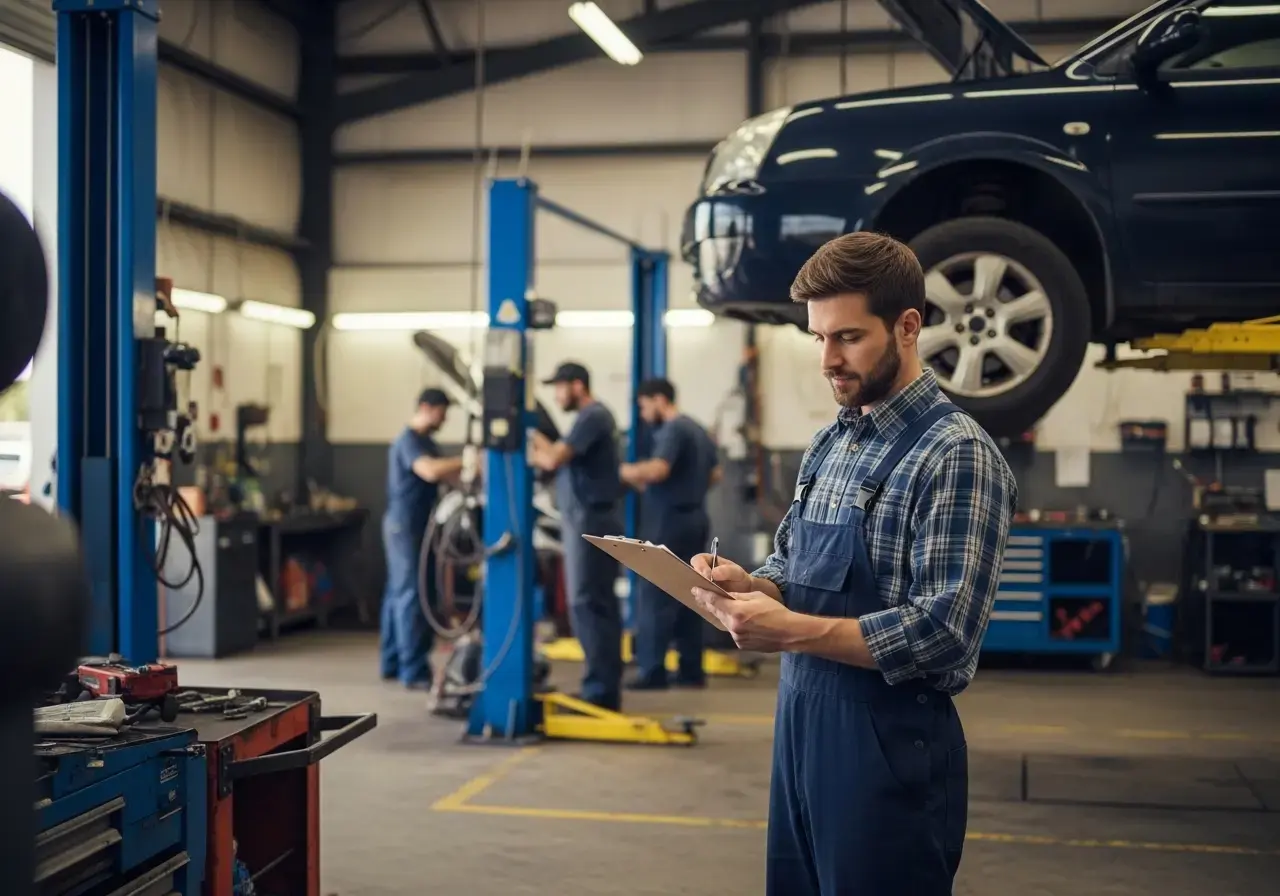
This is the most obvious group. If you run an auto repair shop, customers are in and out of your space constantly. Vehicles are coming in with mechanical problems, going up on lifts, getting tested on the road. The liability exposure here is real and ongoing. Auto repair shop and garage insurance is one of the most common policies I help clients set up, and the reason is simple: something can go wrong any day.
Car Dealerships
Dealerships have a different exposure. Customers are test driving cars. Salespeople are moving vehicles around a lot. Service bays are doing prep and inspection work. Garage liability insurance for auto dealers is a standard part of doing business at this level, especially when you're operating in a high traffic area like Mid Island New York, where lots can get busy and incidents happen.
Body Shops
Body work means expensive vehicles sitting in your facility for days or weeks at a time. It means chemicals, equipment, and open flames in some cases. Liability exposure comes from multiple directions. A customer's car gets scratched while being moved. A visitor gets hurt near active equipment. These are regular risks in body shop work.
Independent Mechanics
A solo mechanic with a small operation still has real exposure. One unhappy customer who claims the repair made things worse can turn into a lawsuit. One person who visits your workspace and gets hurt can put you in a very difficult position without coverage. The size of the business doesn't reduce the legal risk.
Mobile Mechanics
This one surprises people. Mobile mechanics often think they don't need the same coverage as a fixed location. But they're working in driveways and parking lots, handling vehicles that belong to customers, using tools that can cause damage. If something goes wrong during a job, the question of liability doesn't change just because there's no building involved.
Businesses That Often Overlook This Coverage
Some of the businesses I see skip proper coverage are ones that genuinely don't think the rules apply to them.
Small garages operating out of a single bay. Part time mechanics doing side work on weekends. Home based auto operations where someone's running a small repair business out of their own garage. The scale feels informal, so the mindset is that insurance is for bigger, more official operations.
That's a risky way to think about it.
A part time mechanic working out of their home garage can still be held liable for a repair that leads to a problem down the road. A small shop with just two employees can still face a serious injury claim. The law doesn't make exceptions for small operations. If you're accepting money for automotive work, you have professional exposure.
Home based auto work is especially tricky. Homeowners insurance won't cover business activity in most cases. That means if something goes wrong during a job done in your personal garage, you're on your own.
Real Life Risk Examples
Let me walk through some situations I've seen or heard about directly from clients.
The Customer Slip
A customer comes in to pick up their vehicle after a routine oil change. The floor near the bay door is wet from earlier rain. They slip. They don't break anything serious, but they're sore for weeks, miss some work, and eventually contact a lawyer. Without garage liability insurance, the shop owner is paying out of pocket for the settlement and the legal defense.
The Backed In Incident
A backed into garage door insurance claim is more common than people think. A customer's vehicle gets moved during the day and clips a structural wall or another vehicle. The repair cost alone can run several thousand dollars. If that vehicle is in your care when it happens, you need the right policy responding to that claim.
The Post Repair Problem
A shop replaces brake components. Three weeks later the customer calls saying there's an issue. They claim the repair was done incorrectly and caused damage. Whether or not the shop is actually responsible, they now face a claim. Garage liability insurance includes coverage for completed operations, which handles exactly this kind of situation.
The Property Damage Dispute
A mechanic is doing work in a customer's driveway. Something tips and damages the customer's fence or nearby property. Now there's a dispute about who pays for the damage. Without commercial garage insurance, the mechanic absorbs the full cost.
Garage Liability vs. Garage Keepers Insurance
This is the part that trips people up most often. These two coverages sound similar but they serve very different purposes.
Garage liability insurance covers your liability as a business. If someone gets hurt on your property, if you cause damage through your operations, if a completed job leads to a claim, that's garage liability responding.
Garage keepers insurance is different. It specifically covers customer vehicles that are in your care, custody, or control. If a car is stolen from your lot, if it's damaged by fire, if it gets hit by another vehicle while parked in your facility, that's a garage keepers claim. The vehicle itself is the focus.
Most shops need both. Garage keepers insurance companies offer these policies alongside garage liability, and bundling them usually makes sense from both a cost and a coverage standpoint.
I've talked to shop owners who thought their garage liability covered everything, including theft of a customer's vehicle. It doesn't. And I've talked to others who had garage keepers but no liability coverage, assuming it protected them from all claims. The two policies work together. Neither one replaces the other.
Location Based Considerations: New York Specifics
Where your business is located matters more than most people realize when it comes to insurance pricing and requirements.
In New York, and particularly on Staten Island, auto businesses face a specific combination of high foot traffic, dense residential neighborhoods, and a commercial environment where liability claims are not uncommon. Shops in areas like Mariners Harbor see a steady flow of working class vehicle owners who rely on fast, affordable repairs. A single incident in a busy shop can quickly become a complicated legal situation.
For businesses looking into garage insurance in Mariners Harbor Staten Island New York, the options are broader than people expect. Many regional insurers understand the local market and can price policies based on the specific nature of what you do, not just your zip code.
In Port Richmond, which has a long history of auto related businesses, owners have been working with garage liability insurance company in Port Richmond Staten Island New York for decades. The neighborhood has a lot of smaller independent operations that tend to underestimate their exposure. A customer base that knows the shop personally doesn't make liability claims less likely. It sometimes makes them more complicated to navigate.
Over in the Bulls Head and Mid Island areas, auto repair garage insurance in Bulls Head Mid Island New York is a topic that comes up regularly among business owners managing higher volume operations near major roads. Traffic density means more vehicle movement, which means more opportunity for incidents.
New York also has specific legal standards that can affect how claims play out in court. Comparative negligence rules mean that even if a customer was partially responsible for their own injury, you can still be held liable for your share. Working with someone who understands how New York liability law affects garage operations is important.
Cost Factors and What Affects Pricing
Garage liability insurance isn't priced the same for every business. Several factors go into what you'll actually pay.
Business size plays a big role. A two person shop pays a different premium than a multi bay operation with ten employees. The number of vehicles you handle at any given time also matters.
The services you offer affect pricing. A shop that does basic oil changes carries different risk than one doing transmission work or brake system overhauls. The more complex the repairs, the higher the potential for a dispute or a claim.
Claims history matters. If your business has had previous claims, insurers will factor that in. A clean history usually means more competitive pricing.
Your location affects it too. Operating in a denser urban environment like Staten Island tends to push premiums slightly higher than a rural location, simply because there's more activity and more exposure.
Coverage limits are something to think about carefully. Minimum limits might keep premiums low, but they might not be enough to fully protect you in a serious claim. A good advisor will walk you through realistic scenarios to help you choose appropriate limits for your operation.
Common Mistakes Garage Owners Make
The biggest mistake I see is assuming general liability is enough.
A general liability policy covers a lot of things, but it often excludes coverage for businesses that work on, sell, or store vehicles. That exclusion is buried in the policy language, and most business owners never read it carefully. They assume they're covered, they pay their premium, and then when a claim happens, they find out they're not.
Skipping coverage to save money is another one. I understand that insurance feels like an expense when nothing has gone wrong yet. But one serious liability claim can easily reach six figures. The premium you skipped paying looks very different next to a $200,000 settlement.
Misunderstanding what is covered is common too. Some shop owners think their policy covers any incident on the property. Others think it covers the vehicles themselves. Neither assumption is accurate without looking at the specific policy. Reading the exclusions is just as important as reading the coverage descriptions.
Not updating coverage as the business grows is something I also see regularly. A policy that made sense for a small operation three years ago might have gaps now that the business has expanded, added employees, or started offering new services. Coverage should be reviewed at least once a year.
How Garage Owners Typically Get Coverage
The process isn't complicated, but it requires some attention to get right.
Most shop owners start by getting garage insurance quotes from a few different sources. Comparing those quotes side by side is useful, but the numbers alone don't tell the whole story. Two policies with similar premiums can have very different coverage details, exclusions, and claim support quality.
Working with an agent who has experience in the auto business sector helps a lot. They know which policy forms actually cover the risks you face, and they can flag gaps that you might not know to look for.
When reviewing any policy, pay attention to: the garage operations definition, the completed operations coverage, any exclusions related to specific vehicle types or services, and the coverage limits relative to the value of work you do each month.
Also ask about bundling options. Many insurers offer packages that combine garage liability, garage keepers coverage, and commercial auto into a single policy. That can simplify things and sometimes reduce overall cost.
Questions Garage Owners Often Ask
Closing Thoughts
Not every business needs the exact same coverage. A mobile mechanic doing basic tune ups has different needs than a full service dealership with a service center. But almost any business that earns money from automotive work carries real liability exposure.
The risk isn't theoretical. It shows up as a slip and fall, a disputed repair, a damaged vehicle, a backed in incident that turns into an insurance claim. These things happen in shops of every size, in every neighborhood.
Understanding what garage liability insurance covers, how it differs from other policies, and what it costs to get the right coverage is worth the time. The conversation is a lot easier before something goes wrong than after.
If you're running any kind of auto related business and you're not sure whether your current coverage actually protects you, that uncertainty is worth resolving sooner rather than later. Read more
Share this post:
Related Posts
Understand what garage liability insurance means, what it covers, and who needs this essential prote...

Explore the best insurance companies for startups in the U.S., including coverage types, pricing, an...
Discover how to compare auto repair shop insurance quotes, lower costs, and choose the right policy...