

Get Auto Repair Shop Insurance Quotes Fast | Bizins
-
Home
-
Garage Insurance
-
How to Get Competitive Quotes for an Auto Repair Shop Policy

How to Get Competitive Quotes for an Auto Repair Shop Policy
Discover how to compare auto repair shop insurance quotes, lower costs, and choose the right policy for your garage business.

Introduction
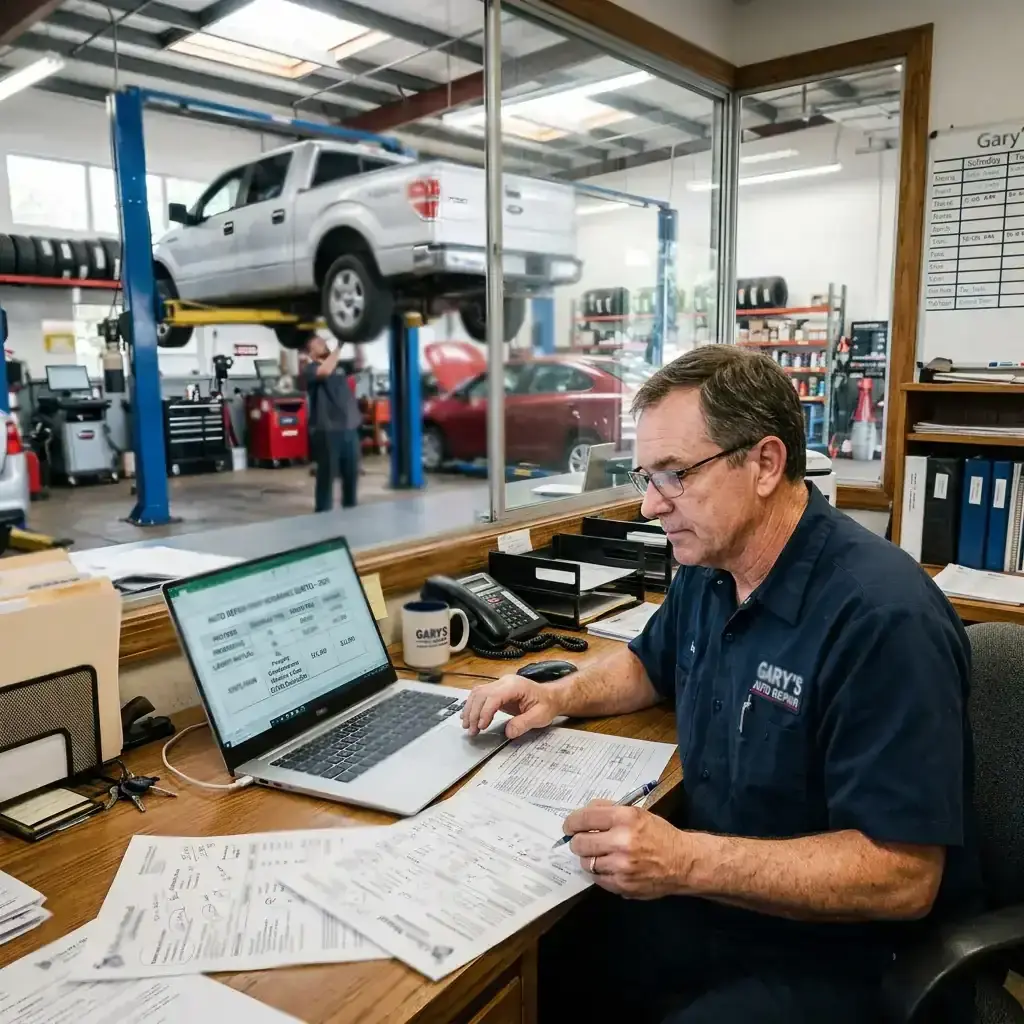
Most auto repair shop owners tell me the same thing when we first talk about insurance. They say they got a quote, it seemed high, they called someone else, got a different number, and now they have no idea what they are actually paying for.
That confusion is real. And it costs shop owners money every single year.
Getting a fair quote for auto repair shop and garage insurance is not as simple as calling three agents and picking the lowest number. The quotes you receive can vary by hundreds or even thousands of dollars, and they often cover very different things. If you do not know what to look for, you might end up underinsured, or paying more than you should for coverage you did not need.
This guide walks you through how to actually shop for insurance as a shop owner. Not the generic stuff. The real process that makes a difference.
What Auto Repair Shop Insurance Actually Includes
Before you request a single quote, you need to understand what you are buying. A lot of shop owners think they are getting a full package when they are actually missing major pieces.
The core of most auto repair policies is general liability coverage. This protects your business if a customer is injured on your property or if your work causes damage. Say a brake job goes wrong and the customer gets into an accident. Without proper liability coverage, you could be personally on the hook.
Then there is property coverage. This covers your building, your equipment, your tools, and your inventory. A fire, a break in, a flood your shop has a lot of physical assets that need protection.
And then there is garage keepers coverage. This one is specifically designed for shops because it covers customer vehicles that are in your care. If a client's car is stolen from your lot, or damaged in a hailstorm while parked at your shop, garage keepers' coverage is what pays for it. A lot of standard business policies leave this out entirely.
Why Insurance Quotes Vary So Much
You can call five different agents for the same shop and get five very different numbers. Here is why that happens.
Business size matters a lot. A two bay shop with two mechanics is going to pay a very different premium than a ten bay operation with eight employees. Insurers look at your payroll, your square footage, and how many vehicles you service each month.
The services you offer also affect your rate. A shop that only does oil changes and tire rotations is considered much lower risk than one doing full engine rebuilds, transmission work, or diesel repair. The more complex the work, the higher the exposure for the insurer.
Your claims history follows you. If you filed two claims in the last three years, insurers are going to price your policy accordingly. Some may decline to quote you at all. This is why maintaining a clean record matters, even on smaller incidents.
Location plays a bigger role than most people realize. A shop in a high crime area, or in a region prone to severe weather, will see higher premiums. So will a shop near a flood zone. Your zip code is actually one of the first things underwriters look at.
How to Get Competitive Quotes, Step by Step
The biggest mistake I see shop owners make is trying to get quotes before they have their information together. An agent can only give you an accurate number if you give them accurate details.
Start by gathering your basic business information. That means your annual revenue, your payroll total, the square footage of your building, whether you own or lease, how many vehicles you work on per week, and the specific services you offer. Also pull your claims history for the past five years if you can get it.
Once you have that, reach out to at least three to four insurance providers. Do not just call one agent. Go to a commercial insurance broker who works with multiple carriers, and also call a few direct carriers. You want options.
When you get the quotes back, do not compare the premium price alone. Look at the actual coverage limits for each line item. Check what the liability limit is. Check whether garage keepers are included. Look at what the deductible is for each type of claim. Two policies that cost the same might have very different coverage levels.
Ask each agent to walk you through any exclusions. This is the part of the policy that tells you what is not covered. Some policies exclude certain types of vehicles, or certain types of work. If you regularly work on classic cars, or commercial vans, make sure the policy does not quietly exclude that.
Understanding Garage Keepers Insurance
This coverage is one of the most important parts of any auto repair shop policy, and it is also one of the most misunderstood.
Garage keepers coverage protects customer vehicles while they are in your possession. That includes time in your shop, on your lot, or being moved by your staff. If a car is stolen overnight, if a test drive goes wrong, or if another customer accidentally backs into a vehicle in your bay, this is the coverage that responds.
When you request a garage keepers insurance quote, pay attention to two things. First, whether the policy is written on a legal liability basis or a direct primary basis. Legal liability coverage only pays if you are proven to be at fault. Direct primary coverage pays regardless of fault. For most shops, direct primary is worth the extra cost.
Second, look at the per vehicle limit and the aggregate limit. If you typically have fifteen vehicles on your lot at any time and the policy only covers up to five vehicles at once, you have a gap. Make sure the limits match the reality of your operation.
Comparing Different Types of Policies
When you start shopping, you will encounter a few different terms for similar sounding products. Understanding the difference saves you from buying the wrong thing.
Commercial garage insurance is a broad term that covers garages as a business type. It can include auto body shops, service stations, car dealerships, and repair shops. The coverage is designed around businesses that work with vehicles regularly, not just occasionally.
Auto repair garage insurance is more specifically tailored to shops that do mechanical or body work. It tends to include higher limits on garage keepers coverage and more specific language around completed operations liability. Completed operations coverage protects you if a customer drives away and later claims your work caused damage or injury.
If you run a shop that also has a few service vehicles, like a tow truck or a loaner car program, you may need additional commercial auto coverage layered on top. Do not assume your garage policy automatically covers vehicles your employees drive for business purposes.
What to Look for in a Quote
Here is a practical checklist when reviewing any quote you receive.
Coverage limits should reflect your actual exposure. If your shop generates $800,000 in annual revenue, a liability limit of $300,000 is probably not enough. Most commercial advisors recommend at least $1 million in general liability for an active auto repair operation.
Deductibles affect both your premium and your out of pocket cost in a claim. A higher deductible lowers your monthly or annual premium, but make sure it is a number you can actually pay if something goes wrong. A $10,000 deductible sounds fine until you have to write that check.
Read the exclusions section carefully. Common ones to watch for: exclusions on work done on specialty vehicles, exclusions on pollution or chemical exposure, and exclusions on faulty workmanship. That last one is tricky because most general liability policies do not cover faulty workmanship by default. You may need a separate endorsement for that.
Common Mistakes Shop Owners Make When Buying Insurance
The most common mistake is going with the cheapest quote. I understand the impulse. Insurance feels like an expense you never use. But when you do need it, the difference between a solid policy and a cheap one is enormous.
A shop owner I know chose the lowest priced option a few years back. A customer's vehicle was broken into while parked at his lot overnight. The cheap policy he had did not include garage keepers coverage. He ended up paying for the customer's stolen items out of pocket and nearly lost the customer relationship entirely.
Another mistake is not updating your policy as your business grows. If you added a new service bay, hired two more mechanics, or started working on commercial vehicles, your risk profile has changed. Policies that are outdated can leave you with coverage gaps even if you think you are fully protected.
Some shop owners also forget to disclose past claims when applying. That can backfire badly. If an insurer discovers an undisclosed claim during an audit, they may deny your current claim or cancel your policy entirely.
Factors That Help Lower Your Insurance Cost
You do have some control over what you pay. Insurers reward shops that take risk management seriously.
Security upgrades matter. Installing cameras, better lighting, alarm systems, and secure overnight parking for customer vehicles can reduce your premium, especially on the garage keepers portion. Some insurers will ask specifically about your security setup before quoting.
Employee training and certifications help too. ASE certified technicians are seen as lower risk. Shops that document their training programs and maintain service records are viewed more favorably by underwriters.
Your business setup also plays a role. An LLC or corporation with a clean financial record looks different to an insurer than a sole proprietor with no formal structure. It does not mean you cannot get good coverage as a sole proprietor, but formalizing your business often helps.
Related Insurance Needs Worth Knowing About
If your shop works on commercial vehicles, or if you deal with fleet customers, you may find yourself needing to understand commercial truck insurance quotes. These policies cover vehicles used for business transport, and the rates vary depending on cargo type, driver records, and mileage.
Some shop owners who do work for taxi companies or rideshare fleets have also asked me about taxi insurance quotes and Uber Black insurance. If you service those types of vehicles professionally, it is worth understanding that those operators have specific coverage requirements of their own. It does not change what you need for your shop, but it helps you advise your fleet clients better.
Shops that do a high volume of fleet work might also encounter clients using a livery vehicle self insurance trust. This is a more specialized arrangement where certain vehicle owners pool risk rather than buying traditional policies. If your customers use this structure, make sure your own shop policy does not have gaps when it comes to working on those vehicles.
Questions Shop Owners Often Ask
At least three. But more important than the number is the variety. Get quotes from a local independent broker, a direct carrier, and one specialty commercial insurer who works specifically with auto businesses.
No, you do not. Coverage is based on the overall operation, not individual bays. But the number of bays does factor into your risk profile and your garage keepers limits.
Talk to your broker about adjusting deductibles, bundling policies, or phasing in higher limits over time. There are usually ways to get adequate protection without one large upfront cost.
At minimum, once a year at renewal. Also review it any time you add services, hire staff, expand your space, or take on new types of vehicles.
Closing Thoughts
Getting a good auto repair shop and garage insurance in new york is not about finding the cheapest policy. It is about finding the right policy for how your business actually operates.
The shop owners who regret their insurance decisions almost always made the same mistakes. They rushed the process, picked the low price, and skipped the hard questions. The ones who feel protected are the ones who spent an extra hour understanding what they were buying.
Take time to gather your business details before you reach out to any agent. Ask for itemized quotes. Compare coverage, not just cost. And make sure garage keepers coverage is part of your policy, not an optional add-on you skipped to save a few dollars.
A solid insurance policy is one of the few things in business that costs you nothing until the day it saves everything. Read more
Share this post:
Related Posts
Understand what garage liability insurance means, what it covers, and who needs this essential prote...
Discover who needs garage liability insurance, what it covers, and how to compare affordable plans....
A practical guide for auto shop owners, dealerships, and garage operators especially in New York.