

What Is Considered a Livery Vehicle? | Simple Guide
-
Home
-
Livery Vehicle Insurance
-
What Is Considered a Livery Vehicle?

What Is Considered a Livery Vehicle?
Clear answers about livery vehicle classification, insurance requirements, and coverage options for rideshare drivers, black car operators, and for hire vehicle owners. Learn what counts as a livery vehicle, why it matters, and how to stay properly insured and legal.

Introduction
I've had this conversation at least a hundred times. A driver walks into the office, confused about why their insurance quote is so much higher than they expected. They tell me they just drive for Uber on weekends, or they do a few airport runs for a car service. They don't understand why their vehicle is suddenly being called a livery vehicle.
The classification matters more than most people realize. It affects your insurance costs, your legal compliance, and whether you're properly covered if something goes wrong. Let me explain what actually counts as a livery vehicle and why it makes such a big difference.
What Livery Vehicle Means in Simple Terms
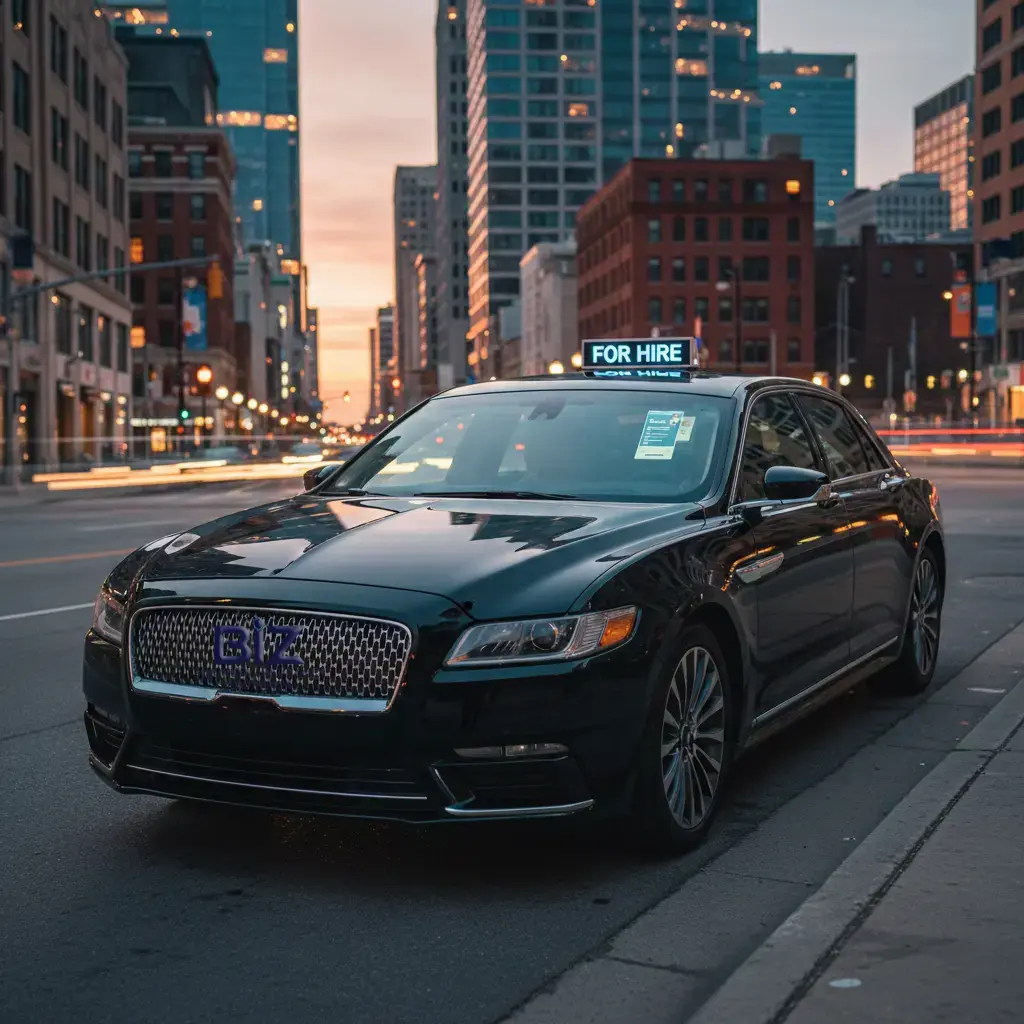
A livery vehicle is any car used to transport passengers for money. That's the basic idea. If you're charging people to ride in your vehicle, you're operating a livery vehicle in the eyes of insurance companies and most state regulations.
The word livery sounds old fashioned because it is. It comes from the days when wealthy families had carriages with specific colors and designs. Those carriages were in livery, meaning they were marked as vehicles for hire.
Today the term covers a much wider range. Your late model sedan doing rideshare pickups falls into the same category as a black car doing corporate runs or a traditional yellow cab. The common thread is simple. You're carrying paying passengers.
Personal vehicles are driven for your own needs. You go to work, run errands, visit family. Livery vehicles are driven as part of a business. The moment you accept payment to transport someone, the nature of that vehicle changes.
Vehicles Commonly Classified as Livery
Most drivers I work with are surprised to learn their car qualifies as livery. Here are the vehicles that definitely fall into this category.
Rideshare vehicles used for Uber or Lyft get classified as livery. It doesn't matter if you only drive a few hours a week. The moment you turn on the app and become available for pickups, you're operating a for hire vehicle. Your personal auto policy won't cover you during that time.
Black cars and luxury vehicles doing prearranged transportation are livery vehicles. These are the cars you see at airports picking up business travelers. They're booked in advance through a dispatcher or app. The drivers need commercial coverage.
Traditional taxis are the most obvious example. Yellow cabs in New York, medallion vehicles in other cities. Everyone understands these are commercial vehicles that need commercial insurance.
Shuttle services and van services that transport multiple passengers are livery vehicles. Airport shuttles, hotel shuttles, medical transport vans. If you're running a route and picking up paying passengers, you need livery coverage.
Wheelchair accessible vehicles used for medical transport fall into this category too. Even though these drivers are providing an important service, the vehicle is still transporting passengers for compensation.
Private car services that do point to point transportation are livery vehicles. These are the companies that compete with taxis and rideshare but operate on a smaller scale. Maybe a local company with five or ten vehicles doing pickups in a specific area.
What Does NOT Count as a Livery Vehicle
This is where people get confused. Not every vehicle used for business is a livery vehicle.
Your personal car remains a personal vehicle when you're using it for regular activities. Driving to your job, taking your kids to school, going grocery shopping. None of that makes your car a livery vehicle.
Delivery vehicles are not livery because they transport goods, not passengers. If you're doing food delivery or package delivery, you need commercial coverage, but it's a different type than livery insurance. The risk profile is different when you're carrying pizzas instead of people.
Rental cars are not classified as livery vehicles even though people pay to use them. The rental company owns the vehicle and carries its own insurance. The person renting the car is using it as a temporary personal vehicle.
Carpooling for gas money usually doesn't count as livery service. If you're giving your co worker a ride and they chip in for gas, that's a personal arrangement. But if you're using an app and accepting payment from strangers, that crosses into commercial territory.
Company vehicles used by employees for business purposes are not livery. If you drive a company car to client meetings or job sites, that's commercial use, but it's not transporting paying passengers.
Why Insurance Companies Care About Livery Classification
Insurance companies look at risk. Livery vehicles carry more risk than personal vehicles for several clear reasons.
You're on the road for more hours. A personal vehicle might be driven ten or fifteen hours a week. A livery vehicle can be on the road fifty or sixty hours. More time driving means more exposure to accidents.
You're driving in high traffic areas. Livery drivers spend time in busy urban zones, near airports, in congested downtown areas. These are exactly the places where accidents happen most often.
You're carrying strangers who could get injured. If you rear end someone while driving your personal car, you might injure yourself. If you rear end someone while carrying three passengers in your livery vehicle, you could be liable for injuries to all three of them plus the other driver. The potential claim size is much larger.
You're stopping and starting constantly. Rideshare drivers in particular are pulling over, making turns, watching their phones for the next pickup. This driving pattern is more dangerous than highway commuting.
Passengers can sue you. This is the big one. If someone gets hurt in your personal vehicle, your personal auto policy covers it. But personal policies specifically exclude coverage when you're using your vehicle for commercial purposes. That means if you're driving for Uber and get into an accident, your personal policy won't help you.
Livery Insurance vs Personal Auto Insurance
Personal auto insurance is designed for people who drive for personal reasons. It covers you when you're going about your daily life. The premiums are based on the assumption that you're a normal driver with normal risk.
Livery insurance is designed for commercial passenger transport. It covers you when you're carrying paying passengers. The premiums are higher because the risk is higher.
The coverage limits are usually different too. Personal auto policies in New York might carry minimum liability limits of $25,000 per person and $50,000 per accident for bodily injury. Livery policies often require much higher limits. You might need $100,000 per person and $300,000 per accident, or even higher.
Personal policies exclude commercial use. Read your personal auto policy and you'll find language that says coverage doesn't apply when the vehicle is used to carry passengers for a fee. Insurance companies put this exclusion in every personal policy.
Some rideshare companies provide coverage while you're actively on a trip. Uber and Lyft have commercial policies that kick in once you accept a ride request. But there are gaps. The period when you're logged into the app but haven't accepted a ride yet may not be fully covered.
Many drivers try to avoid buying livery insurance because it costs more. They keep their personal policy and hope nothing happens. This is a dangerous gamble. If you have an accident while carrying a passenger, your personal insurer will likely deny the claim. You could be personally liable for all damages.
State Level Differences in Livery Classification
Every state handles livery vehicles differently. What counts as a livery vehicle in one state might not in another. The insurance requirements vary widely too.
New York has some of the strictest rules in the country. The state requires specific licenses for different types of for hire vehicles. You need a TLC license to drive a taxi or for hire vehicle in New York City. The insurance requirements are detailed and enforced.
California regulates rideshare differently than New York. The state requires transportation network companies like Uber and Lyft to provide insurance coverage for their drivers. But the rules about when that coverage applies can be confusing.
Florida has minimum insurance requirements for livery vehicles that are higher than personal auto minimums. If you're operating a livery service in Florida, you need to understand those requirements.
Some states don't use the term livery at all. They might call these vehicles for hire vehicles or commercial passenger vehicles. The terminology changes but the concept is the same.
Smaller states with less urban density might have simpler rules. If you're running a car service in a rural area, the regulatory environment is usually less complex than in a major city.
The key point is you need to know the rules where you operate. Don't assume that what works in one state applies somewhere else.
Why New York Has Stricter Rules
New York, especially New York City, has been regulating livery vehicles for decades. The rules are complex because the industry is huge and the city takes passenger safety seriously.
The Taxi and Limousine Commission controls for hire vehicles in the city. They set insurance requirements, vehicle standards, and driver qualifications. If you want to operate legally, you follow their rules.
Livery vehicle insurance in New York often requires higher limits than in other states. You might need $100,000 per person, $300,000 per accident, and $50,000 for property damage as a minimum. Some operations need even more.
The city wants to make sure passengers are protected. If someone gets hurt in a livery vehicle, there needs to be adequate insurance to cover medical bills, lost wages, and other damages. The high coverage requirements reflect the high cost of accidents in New York.
Enforcement is real. The TLC can inspect vehicles, check insurance documents, and issue fines for violations. Drivers who operate without proper insurance face serious penalties.
The complexity means many drivers work with insurance agents who specialize in livery coverage. These agents understand the TLC requirements and can help drivers get the right policies.
Self Insurance Trusts and Livery Fleets
Some larger livery operations don't buy traditional insurance. Instead they participate in a self insurance trust. This is an option mainly for fleet owners, not individual drivers.
A livery vehicle self insurance trust is a group of fleet owners who pool their money to cover claims. Instead of paying premiums to an insurance company, members pay into the trust. When someone has a claim, the trust pays it.
The trust needs approval from the state. In New York, you have to meet certain financial requirements and prove you can handle claims. Not every fleet qualifies.
The advantage is cost savings for some operators. If your fleet has a good safety record, you might pay less into a trust than you would for traditional insurance premiums.
The disadvantage is risk. If claims are higher than expected, trust members might need to contribute additional money. You're sharing risk with other fleet owners.
Most individual drivers and small operations stick with traditional insurance. Self insurance trusts are really designed for established fleets with multiple vehicles and professional management.
How Drivers Choose Insurance Coverage
When a driver needs livery coverage, they usually start by asking other drivers who they use. Word of mouth is big in this industry. If someone has a good experience with an agent or company, they tell their friends.
Price matters obviously. Livery insurance costs more than personal auto insurance, sometimes significantly more. Drivers compare quotes from multiple companies to find coverage they can afford.
But price isn't everything. You also want an insurer that pays claims fairly and quickly. I've seen drivers choose the cheapest policy only to have major problems when they actually need to file a claim.
Some drivers look for agents who specialize in livery coverage. These agents understand the industry, know the regulatory requirements, and can explain options clearly. Finding someone who speaks your language and understands your situation makes the process easier.
Coverage limits are important too. You want enough coverage to protect yourself if something serious happens. Carrying minimum limits saves money now but could cost you everything if you're in a major accident.
The application process varies by company. Some insurers make it easy. Others require extensive paperwork and vehicle inspections. Drivers often choose based on how smooth the process is.
Common Questions Drivers Ask
Yes. The moment you're logged into the app and available for rides, you're operating a livery vehicle. Your personal policy won't cover you during that time.
It depends on what you were doing at the exact moment of the accident. If you had a passenger in the car, the rideshare company's insurance should cover it. If you were between rides, coverage gets complicated. This is why having your own livery policy is important.
Some insurance companies offer rideshare endorsements that fill the gaps in coverage. These can work for part time drivers. But full time livery drivers usually need a complete commercial policy.
It varies widely based on your driving record, the vehicle you drive, where you operate, and how much you drive. In New York, expect to pay several thousand dollars a year at minimum. High risk drivers or those with accidents pay more.
Then you shouldn't be driving commercially. Operating without proper insurance is illegal and incredibly risky. If you cause an accident, you could lose everything you own.
Yes. Luxury vehicles cost more to insure than standard sedans. Larger vehicles like SUVs might have different rates. Older vehicles might be harder to insure through some companies.
Closing Thoughts
Understanding whether your vehicle is considered a livery vehicle comes down to one question. Are you transporting passengers for money? If the answer is yes, you're operating a livery vehicle and you need appropriate insurance.
The classification isn't meant to make your life harder. It exists because carrying passengers for hire creates different risks than personal driving. Those risks require different coverage.
Getting the right insurance protects you, your passengers, and everyone else on the road. It keeps you legal and gives you peace of mind. The cost might seem high, but it's nothing compared to what you'd face if you caused a serious accident without proper coverage.
Take the time to understand the requirements in your state. Talk to an agent who knows the livery industry. Ask questions until you're confident you have the coverage you need.
Your vehicle becomes a livery vehicle the moment you start using it commercially. Make sure your insurance reflects that reality. Read more
Tags:
livery vehicle self insurance trust for hire vehicle insurance best livery insurance companiesShare this post:
Related Posts

Discover how to compare auto repair shop insurance quotes, lower costs, and choose the right policy...
A clear guide explaining what livery means in insurance for drivers and fleet owners. Learn why pers...

This post explains why livery insurance is so expensive, covering risk factors, state regulations, v...