

How to Get Uber Insurance | What Works & What It Costs
-
Home
-
Uber Insurance
-
How to Get Uber Insurance: What Actually Works and What It Costs

How to Get Uber Insurance: What Actually Works and What It Costs
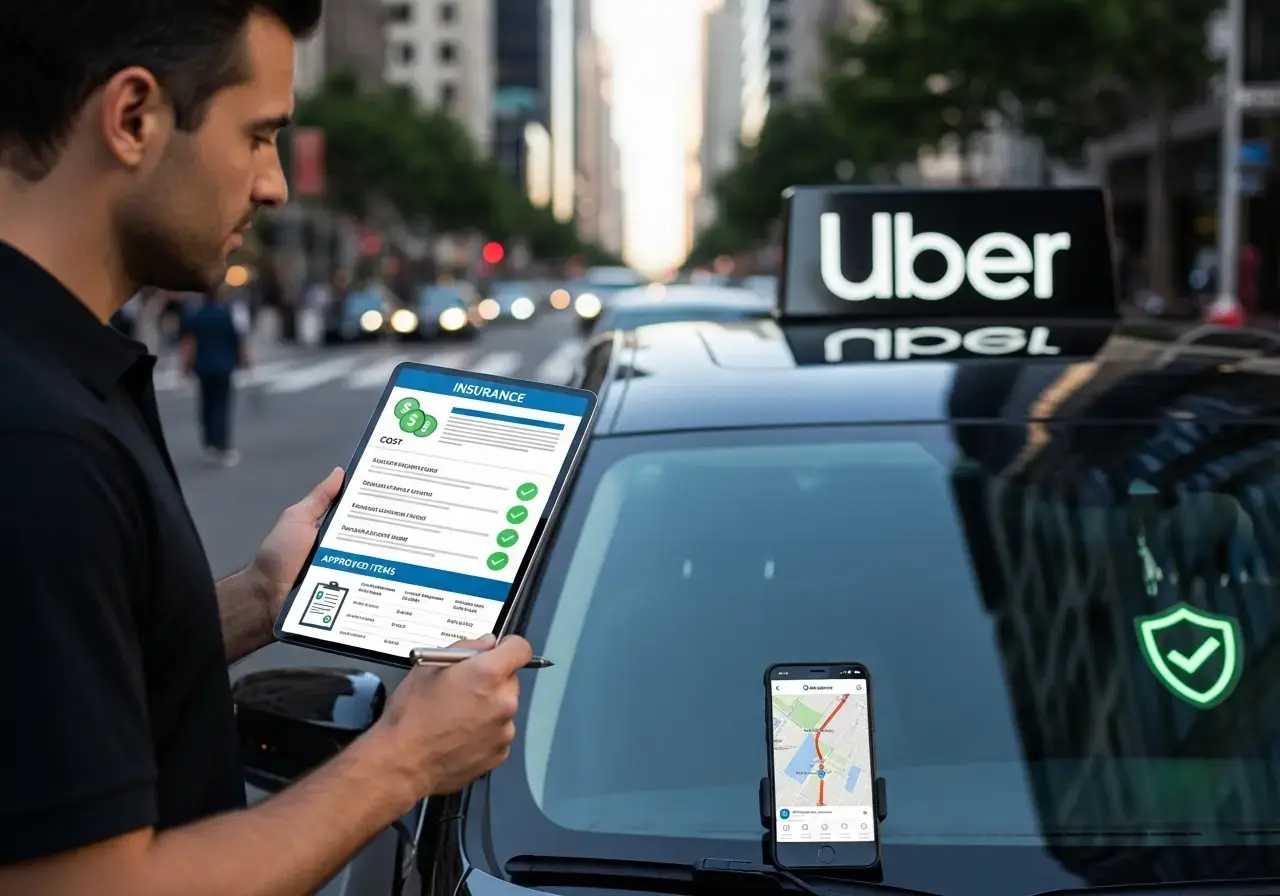
A practical guide for Uber drivers explaining insurance requirements, coverage gaps, and real costs. Learn why personal insurance isn't enough, how Uber's coverage works across different driving phases, and what rideshare endorsements or commercial policies you actually need to stay protected and avoid denied claims.

Introduction
Most Uber drivers don't realize their personal car insurance won't cover them during a rideshare trip. I've talked to drivers who found this out the hard way after an accident, when their claim got denied and they were stuck with thousands in repair bills.
The confusion makes sense. Uber provides some coverage, but it doesn't work the way most people think. Your personal policy has gaps. Uber's policy has gaps. And unless you know exactly what you're dealing with, you can end up in a situation where nobody pays.
This happens more often than it should. A driver gets hit while waiting for a ride request. Their personal insurer says it's a commercial activity and denies the claim. Uber's coverage hasn't kicked in yet because no passenger was in the car. The driver pays out of pocket.
Let me walk you through how this actually works. Not the marketing version. The real version.
What Uber Insurance Actually Covers
Uber provides liability coverage, but only during specific moments. They break it into three phases, and each one has different rules.
- Phase 1 is when you're logged into the app but haven't accepted a ride yet. You're waiting. During this time, Uber provides liability coverage if you cause an accident. The limits are lower than what kicks in later, usually around $50,000 per person and $100,000 per accident for bodily injury, plus $25,000 for property damage. But here's the catch. This coverage is secondary. That means your personal insurance is supposed to pay first. If your personal policy denies the claim because you were doing rideshare work, then Uber's coverage applies. Most personal policies will deny it. They're not stupid. They know what app on means.
- Phase 2 starts when you accept a ride and are heading to pick up the passenger. Now Uber's liability coverage usually increases to $1 million. This also includes uninsured motorist coverage if you get hit by someone without insurance. Collision and comprehensive coverage kick in too, but only if you already have those on your personal policy. And there's a deductible, often $1,000 or $2,500 depending on your market.
- Phase 3 is when the passenger is in your car. Same coverage as Phase 2. A million in liability, uninsured motorist protection, and collision/comprehensive if you have it personally. The same deductible applies.
Notice what's missing. During Phase 1, Uber doesn't cover damage to your own car at all. If you're waiting for a ping and someone rear ends you, their insurance should cover it. But if you cause the accident, or it's a hit and run, your car damage is on you unless your personal policy covers it. Most won't.
Where Coverage Gaps Usually Happen
The biggest gap is Phase 1. You're working, but you're not fully covered. Some drivers spend hours in Phase 1 every week, just waiting. If something happens during that time, they're exposed.
I've heard from drivers who say uber insurance couldn't cover my debt after an accident. Usually, it's because they didn't understand which phase they were in, or they assumed Uber would cover their car repairs when it didn't. Or they had a serious accident and the liability limits weren't enough to cover all the damages and injuries.
Another gap is the deductible. If you get into an accident during Phase 2 or 3 and need to use Uber's collision coverage, you're paying $1,000 or more out of pocket before anything gets fixed. Some drivers don't have that kind of cash sitting around. Then there's the personal policy issue. A lot of drivers keep their personal insurance and never tell the insurer they're doing Uber.
They think it's fine as long as Uber has coverage. But if the personal insurer finds out, they can cancel the policy entirely. Then you're driving without any insurance when you're off the app, which is illegal everywhere.
Some drivers have been dropped by their insurer after a single Uber related claim, even if Uber's policy paid it. The insurer doesn't want the risk.
Do You Need Separate Insurance as an Uber Driver?
Yes. Your personal auto insurance policy wasn't designed for commercial use. The moment you turn on the Uber app and start looking for passengers, you're using your car for business. That changes everything.
Most personal policies specifically exclude coverage for any kind of paid transportation. It's right there in the policy language. If you're moving people or goods for money, you're not covered.
Some drivers ignore this. They figure Uber's insurance will handle it. But that only works if you never have a claim when the app is off. And if your insurer finds out you've been driving for Uber without telling them, they can deny claims even when you weren't working. They can also cancel your policy and report you to other insurers, making it harder to get coverage later.
You need either a rideshare endorsement on your personal policy or a separate commercial policy. Which one depends on your situation.
What Is Uber Auto Insurance vs Personal Coverage
Personal auto insurance covers your daily driving. Going to work, running errands, visiting family. It's designed for personal use only.
Uber auto insurance is a broad term. It usually means one of three things: Uber's own coverage that applies when you're on a trip, a rideshare endorsement added to your personal policy, or a full commercial policy.
A rideshare endorsement is an add on to your personal policy. It fills the gap during Phase 1 when you're logged into the app but waiting for a ride. It costs more than regular personal insurance, but less than a full commercial policy. Not every insurance company offers it, but more are adding it now.
A commercial policy is what professional drivers use. It covers you all the time, whether the app is on or off. It's more expensive, but it's comprehensive. Some drivers need it because they can't get a rideshare endorsement, or because they drive for multiple platforms, or because they do Uber Black and the commercial requirements are stricter.
The key difference is this: personal coverage stops when you start working. Rideshare coverage bridges the gap. Commercial coverage replaces everything.
Commercial Requirements in Certain Cities
If you drive in New York City, you need a TLC license and commercial insurance. Personal policies with rideshare endorsements aren't enough. The city treats rideshare like a taxi service, so the insurance has to match.
Los Angeles doesn't require full commercial policies for regular UberX drivers, but the rules get stricter if you're doing airport pickups or certain high-volume zones. You need to check with the city and your insurer.
Uber Black is different everywhere. It's a premium service, and the insurance requirements are higher. You're driving luxury vehicles and charging more per ride. Most markets require commercial insurance for Uber Black, not just a rideshare endorsement. The liability limits are often higher too.
If you're considering Uber Black, call your insurance agent first. Don't assume your current policy will work. Uber Black commercial insurance is a specific product, and not every company offers it. The ones that do will charge more because the risk is higher and the vehicles are worth more.
Some states require rideshare drivers to carry specific minimum coverage amounts. California requires $1 million in liability when a passenger is in the car, but Uber already provides that. The state also requires proof of coverage during Phase 1, which means you need either Uber's contingent coverage or your own rideshare endorsement.
Other states have similar rules. Always check local requirements. What works in one city might get you fined in another.
How to Get Proper Coverage
Start by calling your current auto insurance company. Tell them you drive for Uber. Don't hide it. Ask if they offer a rideshare endorsement.
If they do, ask what it covers and how much it costs. Make sure it fills the Phase 1 gap. Ask about the deductible. Ask if adding the endorsement affects your coverage when you're not working.
If your current insurer doesn't offer rideshare coverage, ask if they're okay with you driving for Uber under your current policy. Some will say no and cancel you on the spot. Others will say you need to find a different insurer for the rideshare part but you can keep your personal policy with them.
If they cancel you or won't cover rideshare, you need to shop around. Look for insurers that specialize in rideshare coverage. Some of the big names that offer it include Bizins LLC, Geico, State Farm, Allstate, Progressive, and Farmers. There are also smaller regional companies that focus on gig workers.
When you call, be clear about what you're doing. Tell them you drive for Uber, how many hours per week, and what kind of car you drive. They'll quote you a price for personal coverage plus the rideshare endorsement.
If you can't get a rideshare endorsement, or if you drive Uber Black, you'll need a commercial policy. These are harder to find and more expensive. Start with commercial insurance brokers. They work with multiple companies and can find options you wouldn't get by calling insurers directly.
Once you have coverage, keep proof of insurance in your car at all times. Upload it to the Uber app when they ask for it. If you get pulled over or get into an accident, you need to be able to show you're properly insured.
Don't let your coverage lapse. If there's any gap, even a day, Uber might deactivate you. And if you get into an accident during a lapse, you're personally liable for everything.
Cost Breakdown
Rideshare endorsements usually add $10 to $30 per month to your personal auto insurance. That's on the low end. In some cities, especially expensive markets like New York or San Francisco, it can be $50 to $100 more per month.
Full commercial policies cost more. Expect $200 to $500 per month depending on where you live, your driving record, the car you drive, and how much you use it. Uber Black drivers pay even more because of the higher vehicle values and coverage requirements.
Your base personal policy also matters. If you're already paying $150 a month for personal coverage, adding a rideshare endorsement might bring it to $180. If you're paying $80, it might only go to $100.
Age plays a role. Younger drivers pay more. So do drivers with accidents or tickets on their record. If you've had a DUI, expect higher premiums across the board, and some insurers won't cover you at all for rideshare.
The car matters too. Insuring a ten year old sedan costs less than insuring a new SUV. If you're driving something expensive or high-performance, your premiums go up. Uber Black drivers with luxury cars can see premiums well over $500 a month.
Location is huge. Urban areas with high accident rates cost more to insure. Rural areas are cheaper. Some zip codes are so expensive that rideshare endorsements aren't even available, and you have to go straight to commercial.
Deductibles affect your premium too. A higher deductible lowers your monthly cost but means you pay more out of pocket if something happens. Most rideshare drivers choose a $500 or $1,000 deductible to balance cost and risk.
What Affects Your Premium
Your driving record is the biggest factor. Every accident and ticket stays on your record for three to five years, depending on the state. If you have multiple incidents, insurers see you as high risk and charge accordingly.
Credit score matters in most states. Insurers use it as a predictor of risk. A low score means higher premiums. Some states ban this practice, but most allow it.
How much you drive affects the cost. If you're doing Uber full time, 40 hours a week, you're on the road more and your risk is higher. Part-time drivers who only work weekends pay less.
The type of coverage you choose changes the price. Liability only is cheaper than full coverage with collision and comprehensive coverage. But if you're financing your car, the lender requires full coverage anyway.
Your insurance history matters. If you've had continuous coverage for years with no lapses, you get better rates. If you've been dropped by an insurer or had a lapse, expect to pay more.
Some insurers offer discounts. Bundling your auto and renters insurance can save money. So can having multiple cars on the same policy. Some companies give discounts for low mileage, even for rideshare drivers who don't drive as much as others.
Health and Financial Protection
Uber health insurance is not the same as car insurance. It refers to the occupational accident insurance Uber provides to drivers. This is a separate policy that covers medical expenses if you get hurt while driving.
The coverage applies when you're on a trip, meaning Phase 2 and 3. If you get injured in an accident while a passenger is in the car or you're heading to pick one up, this policy can help with medical bills, disability payments, and survivor benefits if the injury is fatal.
But it's not traditional health insurance. It doesn't cover regular doctor visits or prescriptions. It's specifically for injuries that happen while you're working.
Some drivers assume this means they don't need health insurance. That's a mistake. You still need real health coverage for everything else. Uber's occupational accident policy is a backup for work related injuries, not a replacement for comprehensive health insurance.
If you don't have health insurance and you get hurt off the clock, you're on your own. Same goes for noni njury medical issues. The occupational accident policy won't help with a broken leg from a hiking trip or treatment for an illness.
Financial protection is another issue. If you cause a serious accident and the damages exceed Uber's liability limits, you can be sued personally for the difference. This is rare, but it happens. A million dollars sounds like a lot, but catastrophic injuries can cost more than that.
Some drivers carry umbrella insurance to protect against this. It's an extra layer of liability coverage that kicks in when your auto policy limits are exhausted. It's relatively cheap, usually $150 to $300 per year for a million in coverage.
Think of it this way. Your car insurance protects you on the road. Your health insurance protects your body. An umbrella policy protects your financial future. All three matter.
Common Mistakes Uber Drivers Make
The biggest mistake is not telling your personal insurer you drive for Uber. Drivers think they're saving money by avoiding the rideshare endorsement. But if something happens and the insurer finds out, the claim gets denied and the policy gets canceled. You end up with no coverage at all and a much bigger problem.
Another mistake is assuming Uber's coverage is enough. It's not. The gaps are real, and they can cost you thousands. I've talked to drivers who totaled their car during Phase 1 and had no way to pay for a replacement because neither their personal policy nor Uber covered it.
Some drivers let their coverage lapse because they can't afford the premium. Then they keep driving anyway, hoping nothing happens. If they get pulled over, they get fined and possibly arrested. If they cause an accident, they're personally liable for all the damages. It's not worth the risk.
Choosing the wrong deductible is another issue. Drivers pick a high deductible to lower their monthly payment, but then they can't afford the deductible when they need to file a claim. A $2,500 deductible might save you $20 a month, but if you can't come up with $2,500 after an accident, your car stays broken and you can't work.
Not shopping around is a mistake too. Insurance prices vary wildly between companies. One insurer might charge $200 for a rideshare endorsement, and another charges $50 for the same coverage. Drivers who don't compare quotes end up overpaying.
Finally, some drivers don't read their policy. They don't know what's covered and what's not. They don't know the exclusions or the limits. Then they're surprised when something isn't covered. Read the policy. Ask questions. Make sure you understand what you're paying for.
Frequently Asked Questions
Yes. Your personal auto insurance doesn't cover commercial activity. You need either a rideshare endorsement or a commercial policy.
They can deny your claims and cancel your policy if they find out. Even claims that have nothing to do with Uber can be denied.
Usually $10 to $100 more per month on top of your personal policy, depending on where you live and your driving record. Commercial policies cost $200 to $500 per month.
Yes, but only during certain times. When a passenger is in the car or you're heading to pick one up, you have $1 million in liability coverage. When you're just waiting for a ride request, the coverage is much lower and doesn't include damage to your own car.
Not unless you have a rideshare endorsement. Personal policies exclude commercial use.
It's commercial insurance required for Uber Black drivers. The requirements are stricter because the service is premium and the vehicles are more expensive.
Uber provides occupational accident insurance that covers medical expenses and lost income if you're injured during a trip. But it's not a replacement for health insurance.
Usually $1,000 or $2,500 depending on your city. This applies if you use Uber's collision coverage during a trip.
Closing Thoughts
Getting the right insurance as an Uber driver isn't optional. It's not something you figure out later. You need it from day one, or you're risking everything.
The gaps in coverage are real. The stories about denied claims are real. The drivers who lost their cars and couldn't work because they didn't have proper insurance are real.
Talk to your insurer. Get a rideshare endorsement or a commercial policy. Pay the extra cost. It's not that much compared to what you'll lose if something goes wrong and you're not covered.
Don't assume Uber's coverage is enough. Don't hide your rideshare work from your insurer. Don't let your policy lapse. And don't wait until after an accident to figure this out.
The peace of mind is worth it. You can drive knowing you're protected. You can focus on your passengers and your earnings instead of worrying about what happens if someone hits you.
Do it right, and you'll never have to say uber insurance couldn't cover my debt or deal with a denied claim when you need help the most. Read more
Share this post:
Related Posts
Driving for Uber? Discover the exact insurance you need to stay protected and avoid costly mistakes....
Does Uber cover you in NYC? Learn how rideshare insurance works, what the TLC requires, and why most...

Affordable commercial auto insurance isn’t just about the lowest price. It’s about getting the cover...